Do Mosquitoes Bite Dogs? How to Protect Your Dog From Mosquito-Borne Diseases
Jun 1, 2026
Key Takeaways
- Mosquitoes can bite dogs through their fur
- Bites cause skin irritation and can transmit heartworm disease
- Prevention includes heartworm medication, removing standing water, and using pet-safe repellents
- Never use DEET or permethrin on dogs
Although mosquitoes' main food source is plant nectar, females need protein for their eggs, which they get from blood meals. Mosquitoes are attracted to carbon dioxide, and just like us, dogs release this when they exhale. There are over 3,500 species of mosquitoes; some prefer humans, while others target mammals or even reptiles. When a mosquito bites your dog, it can penetrate their fur and cause a variety of health issues.
Skin Irritation
Dogs often scratch mosquito bites, sometimes to the point of bleeding and skin damage. This can lead to infection or more serious complications. However, irritation isn’t the most serious risk mosquitoes pose.
Heartworm Disease
The most common mosquito-transmitted disease affecting dogs is heartworm. This serious, potentially fatal condition is caused by parasitic worms that live in the heart, lungs, and blood vessels of infected animals. According to the American Heartworm Society, heartworm disease has been diagnosed in all 50 states, and dogs are especially vulnerable as natural hosts.
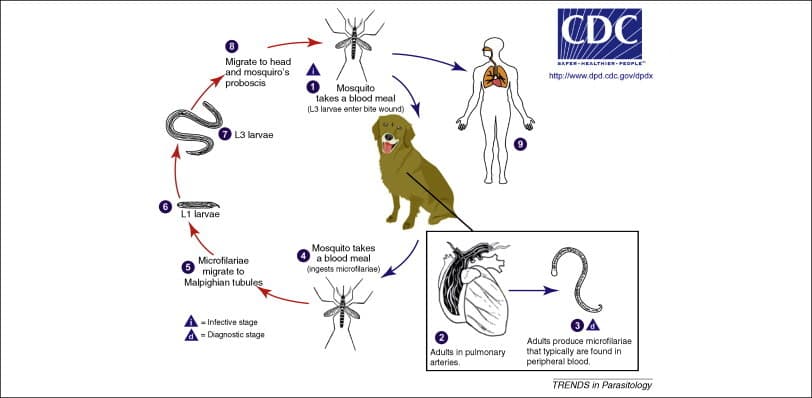
How Heartworm Spreads: The Lifecycle
- An infected mosquito bites your dog
- Larvae (called microfilaria) enter the bloodstream
- Larvae mature over 10–14 days and become infectious
- Adult worms damage the heart, lungs, and major arteries
Once infected, dogs can continue the heartworm lifecycle by passing the parasites to other mosquitoes, which then infect additional animals. Heartworm disease can lead to severe organ damage and, if untreated, death.
How to Protect Your Dog from Mosquitoes
It’s extremely important to protect your dog from mosquito exposure. Here are effective prevention strategies:
- Use heartworm preventative medication – Consult your veterinarian about monthly preventatives
- Remove standing water from your yard where mosquitoes breed
- Keep dogs indoors during peak mosquito hours (dawn and dusk)
- Use screens on doors and windows to keep mosquitoes out
- Create a mosquito-free zone – Thermacell repellents can help deter mosquitoes around your dog
- Install area coverage – The LIV system provides large-area protection for your backyard
Frequently Asked Questions
Can mosquitoes bite through a dog’s fur?
Yes, mosquitoes can penetrate a dog’s fur to reach the skin and feed on blood.
What diseases do mosquitoes transmit to dogs?
The most common and serious disease is heartworm. Mosquito bites can also cause skin irritation and allergic reactions.
Is DEET safe for dogs?
No. DEET is dangerous for dogs and can cause neurological problems including tremors, seizures, or death. Never apply DEET-based products to your dog.
Which pets are most at risk for heartworm?
Dogs and ferrets can contract heartworm disease, with dogs being the most common and natural hosts.
Categories: Questions & Answers


Related Posts

Things You Probably Didn't Know Attract Mosquitoes

Mosquito Season - When Is It In Your State?